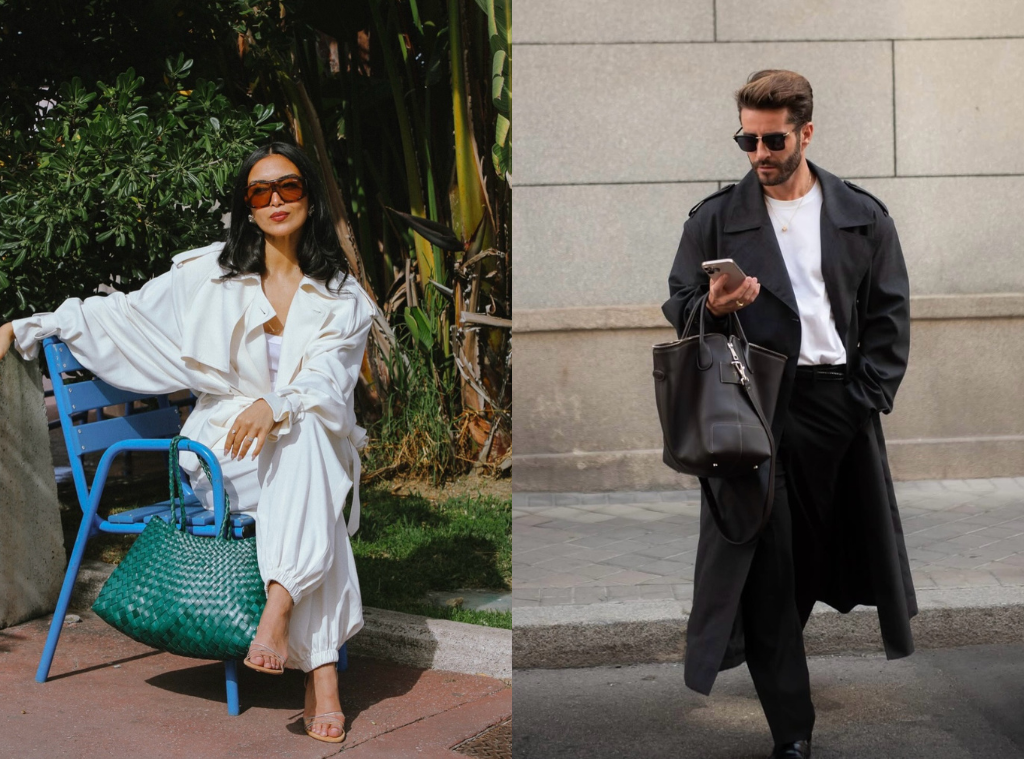
Luxury used to announce itself before the person wearing it had even entered the room. It arrived through recognizable monograms, polished hardware, carefully guarded stores and prices designed to make exclusion feel like part of the product. But fashion has spent the past decade learning to speak more quietly. The logos became smaller, the colors more restrained and the silhouettes more deliberate. Status was no longer communicated only through what could be immediately identified, but through the ability to recognize a particular cut, proportion or shade of beige. Looking expensive became less about displaying wealth and more about demonstrating fluency in the visual language of wealth. Somewhere inside that transition, The Frankie Shop found its opportunity. The brand did not invent minimalism, oversized tailoring or the neutral wardrobe, but it understood that these codes could be separated from the traditional machinery of luxury and offered to a much wider audience. It made the appearance of exclusivity feel attainable, turning the visual confidence of high fashion into something that could be worn to work, through an airport or into a neighborhood café without appearing dressed for an occasion.
The Frankie Shop is often described as accessible luxury, although that phrase does not entirely explain its appeal. It is not a heritage house opening its doors to a lower-priced customer, nor is it a mass-market retailer producing direct imitations of runway collections. It occupies the more interesting territory between those worlds, where a blazer can cost considerably more than one from the high street while remaining far below the price demanded by an established European maison. Its clothes are expensive enough to feel considered but accessible enough to become part of an actual wardrobe. That distinction matters because The Frankie Shop is not selling a distant fantasy. It is selling proximity: proximity to the editors, stylists and fashion insiders who wear its clothes; proximity to the streets of Paris and New York that shape its identity; and proximity to an aesthetic that usually appears beside products carrying much more intimidating price tags. The customer may not be purchasing traditional luxury, but she is being invited into its visual conversation.
Gaëlle Drevet founded The Frankie Shop in New York in 2014 after identifying a disconnect between the lives women were leading and the clothes they were expected to wear while leading them. A former journalist born in France, Drevet saw conventional workwear as overly fitted, performative and still shaped by a masculine idea of how professional women should present themselves. Her alternative was not to reject the masculine wardrobe but to appropriate it: broad shoulders, generous trousers, oversized coats and shirts with enough volume to create movement rather than restriction. The brand’s name was intentionally gender-neutral, while its clothes suggested that authority did not have to depend on a narrowly defined feminine silhouette. The first boutique opened on Stanton Street in Manhattan’s Lower East Side, and an e-commerce operation followed within months as people who encountered the store through social media began requesting access from elsewhere. What began as a neighborhood concept store gradually became an international label with stores in New York and Paris and distribution through luxury retailers including Mytheresa, Net-a-Porter and SSENSE.

The design language that emerged was recognizable precisely because it appeared so uncomplicated. A Frankie Shop look often begins with an oversized blazer, pleated trousers or a coat whose volume creates its own architecture. The palette tends to remain close to black, cream, gray, navy, khaki and chocolate, while the styling depends on proportion rather than decoration. A structured jacket is balanced by a simple tank; a wide trouser is paired with a narrow shoe; a masculine coat falls over something softer and less resolved underneath. The clothes rarely demand to be admired individually. Their power comes from the complete image they create together: composed but not overly polished, relaxed without seeming accidental and fashionable without appearing consumed by fashion. Drevet’s formula combines the controlled minimalism of the 1990s with the stronger silhouettes of the 1980s, producing clothes that photograph as contemporary even when their individual components are familiar. The result is not timelessness in the strictest sense. It is the more commercially powerful illusion of being just outside the trend cycle while remaining perfectly aligned with the present.
That alignment has allowed The Frankie Shop to thrive during a period in which the meaning of luxury has become increasingly unstable. Prices at major fashion houses have climbed dramatically, often faster than the perceived quality or originality of the products themselves. At the same time, fast fashion has become extraordinarily efficient at reproducing visible trends, leaving a growing group of consumers dissatisfied with both extremes. They want clothes that carry a sense of design, cultural relevance and distinction, but they may not want—or be able—to spend several thousand dollars on a jacket. The Frankie Shop addresses that customer without making affordability its loudest message. A T-shirt priced around $75 or a blazer costing more than $200 is not inexpensive in any universal sense, and describing it as democratic would ignore the millions of consumers for whom those prices remain inaccessible. Yet beside four-figure tailoring from The Row, Khaite, Saint Laurent or Bottega Veneta, the proposition changes. The Frankie Shop does not eliminate the cost of participating in fashion; it recalibrates it.
This is where the title Luxury at All Costs begins to acquire its double meaning. The modern consumer is surrounded by versions of luxury at nearly every price level. The same visual idea can travel from a runway to an independent label, through a premium retailer and eventually into the mass market, often within a single season. What changes is not always the idea itself but the fabric, construction, context and social meaning attached to it. The Frankie Shop understands that many customers are no longer building wardrobes exclusively from one level of the market. Its blazer might be worn with vintage denim, a Zara tank, Prada shoes and a designer handbag. The value of the outfit is produced through selection rather than uniform spending. In this environment, taste becomes a form of capital. Knowing what to combine, what to repeat and what to leave unbranded can create the appearance of luxury without requiring every element to carry a luxury price.
Social media did not merely advertise this formula; it became the environment in which the formula made the most sense. The Frankie Shop’s Instagram presence, now followed by approximately two million people, is filled with customers, influencers and fashion professionals interpreting its clothes rather than a succession of conventional campaigns. This user-generated content gives the brand something more valuable than ordinary visibility: social proof. The same blazer appears on different bodies, in different cities and beside products from completely different price categories, demonstrating both its versatility and its cultural acceptance. The customer is not asked to imagine how the clothing might enter her life because she can already see hundreds of possible versions. According to figures previously shared by the company, 70 percent of its business was online and social networks generated 30 percent of its traffic, evidence of how successfully the brand converted digital recognition into commercial demand.
The approach also altered the traditional relationship between fashion week and commercial influence. The Frankie Shop does not need a runway show to participate in the spectacle surrounding the collections. Its stores become informal showrooms, dressing the creators, buyers and editors who will then be photographed moving between official events. Drevet has described the store as her fashion show, a statement that reveals how clearly she understands contemporary visibility. The runway is no longer the only place where a brand can establish authority; the street outside the runway may be equally important. A Frankie Shop coat worn by the right person during Paris Fashion Week can circulate across Instagram, Pinterest, street-style galleries and shopping pages, reaching consumers before many traditional runway looks become available. The brand gains the cultural glow of fashion week without assuming all the costs and conventions of presenting within it.
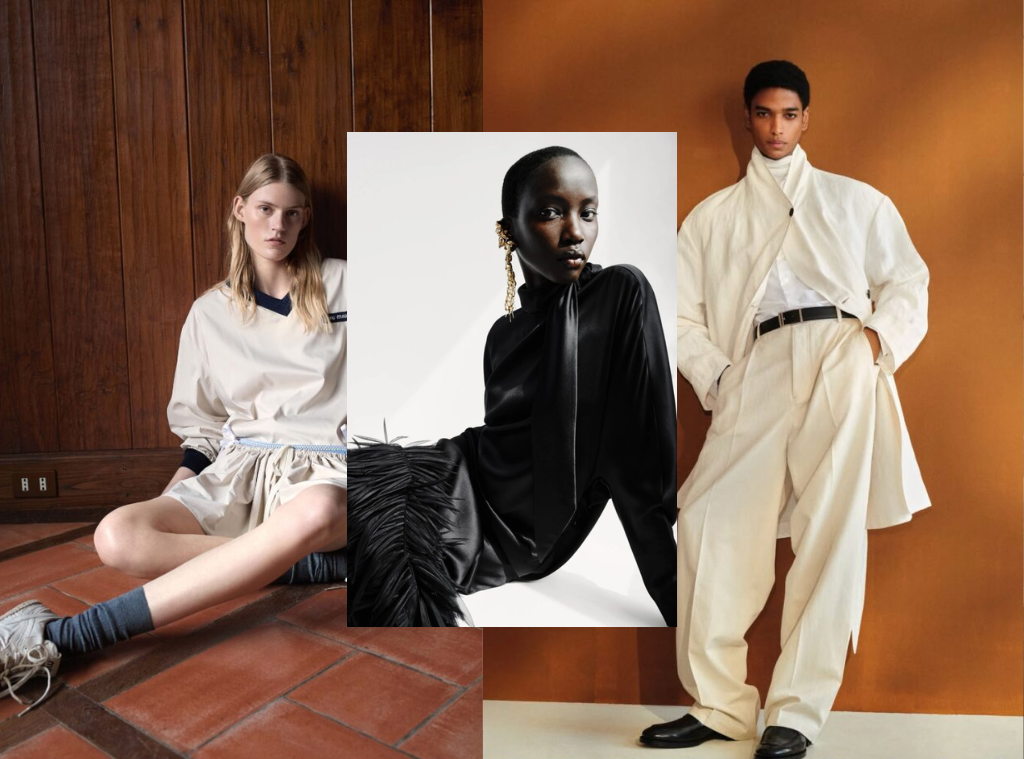
There is, however, an intriguing contradiction at the center of its success. The Frankie Shop was founded to serve women who wanted to look like themselves, yet its popularity has helped create one of the most identifiable uniforms of contemporary fashion. The broad blazer, wide-leg trouser, narrow sunglasses and restrained palette once communicated a certain independence from mainstream trends. Now those elements appear almost everywhere. A style originally associated with individuality becomes a shared code, and the shared code eventually becomes another expectation. This is not necessarily a failure. Fashion has always transformed personal rebellion into collective desire. But it raises a question about what consumers believe they are buying when they purchase minimalism. The absence of a loud logo can feel like freedom from branding, even when the silhouette itself has become a logo recognizable to anyone fluent in contemporary fashion.
The brand’s success also reveals how the idea of “quiet luxury” can obscure the labor required to look effortless. An outfit may appear simple, but its simplicity depends on careful proportion, fabric weight, color and context. The Frankie Shop excels at making those decisions on behalf of the customer. Its pieces are designed to produce an immediate sense of coherence, allowing a person to look as though she has edited her wardrobe with enormous discipline even if she has purchased the solution in a single transaction. That is one of the most valuable services any fashion brand can offer today. In a market overwhelmed by products, the luxury is not necessarily possessing more; it is being relieved of the need to choose among everything. The Frankie Shop sells clothes, but it also sells an edit.
This editing instinct helps explain why the company operates as both a label and a concept store. Drevet has continued to place selected products from other designers beside The Frankie Shop’s own collections, creating a retail environment in which more expensive accessories and independent pieces lend their cultural authority to the surrounding merchandise. The relationship works in both directions. A customer may enter for a recognizable designer bag and discover a more accessible blazer, while another may use that blazer as the foundation for one carefully chosen luxury purchase. Rather than treating high and low fashion as opposing categories, the store presents them as parts of the same wardrobe. That is how many consumers already dress, and it is one reason the business feels contemporary rather than merely aspirational.
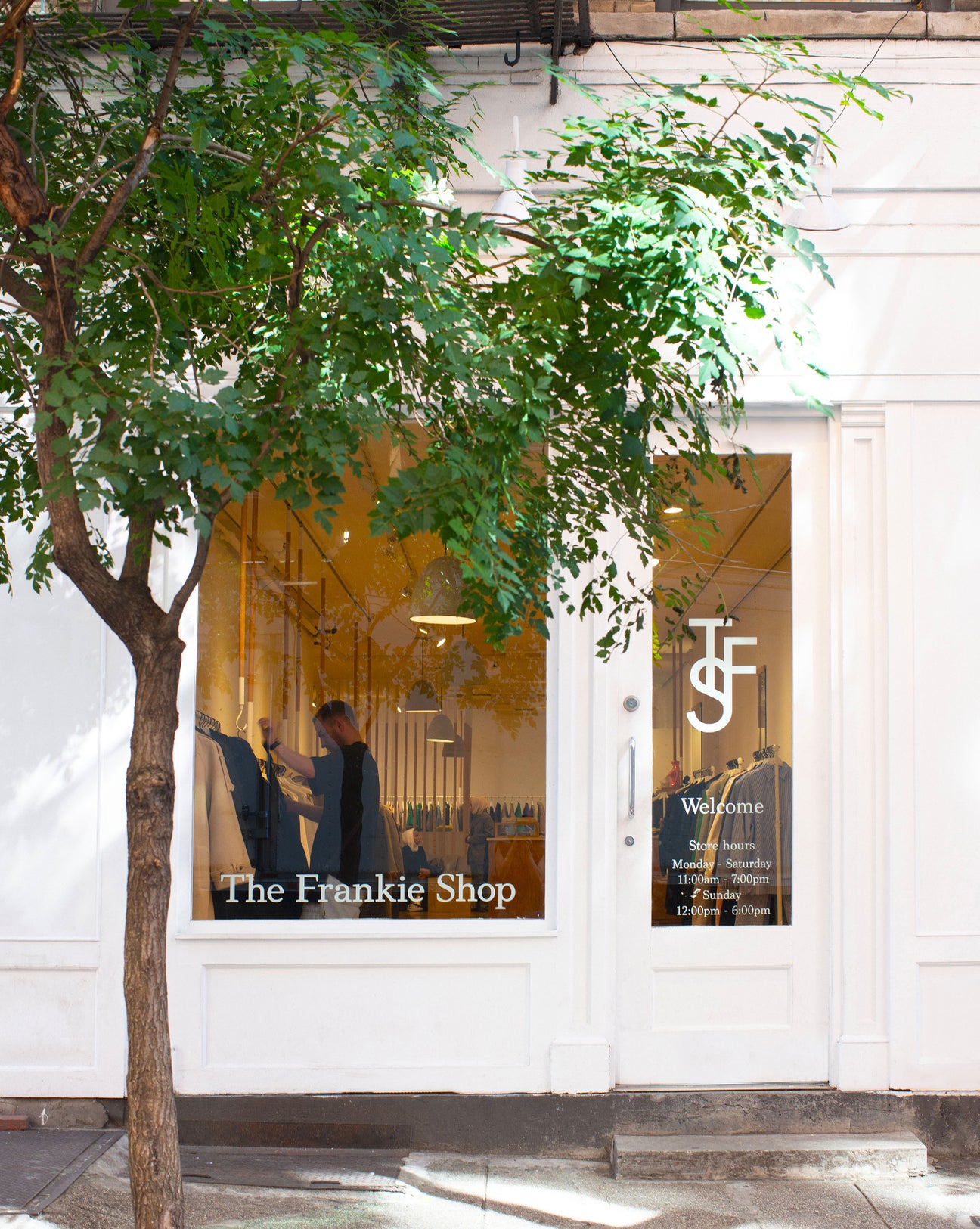
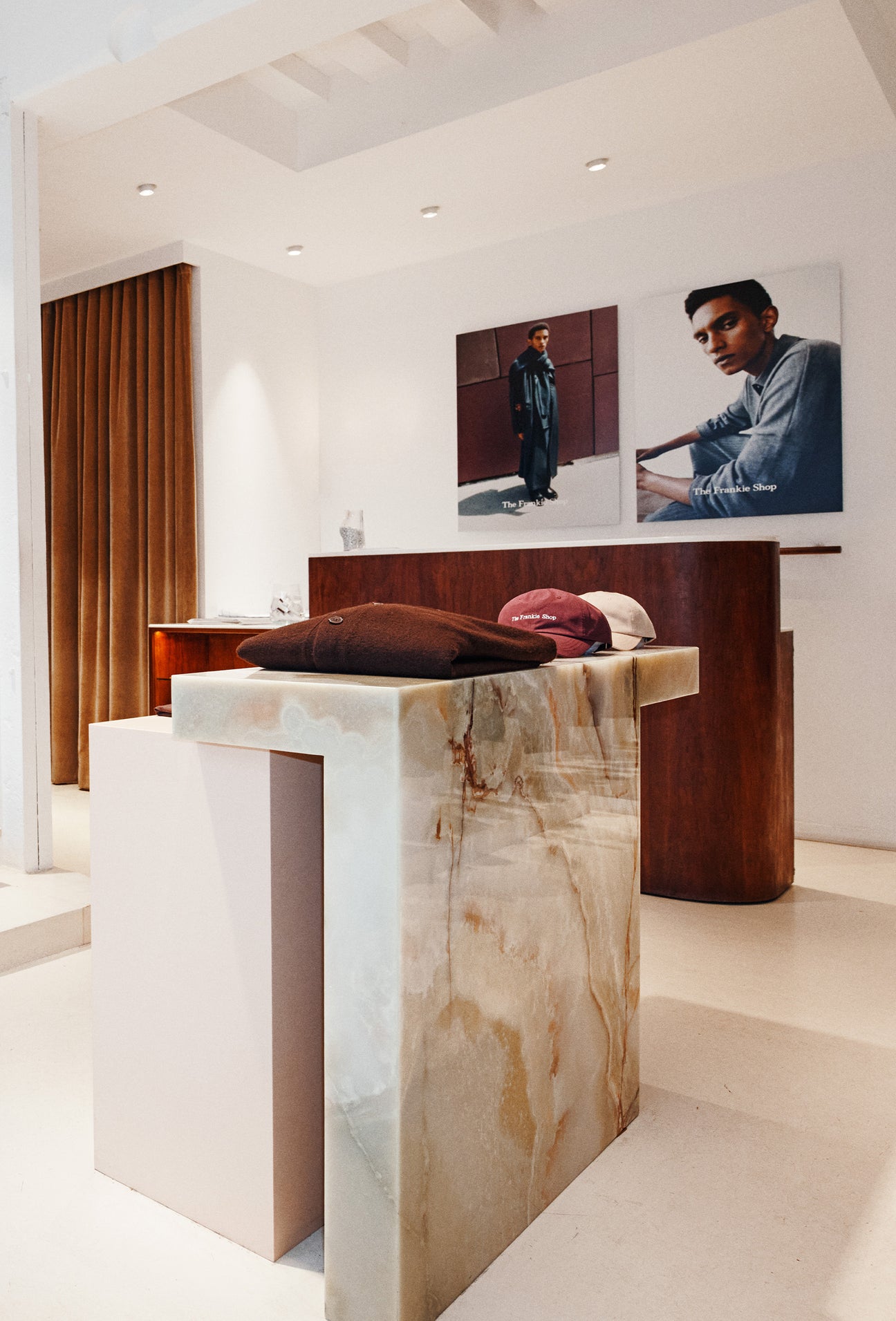
Growth inevitably places pressure on the sense of discovery that made The Frankie Shop desirable in the first place. The brand once benefited from being described as an insider secret, even as its products were appearing across thousands of social media feeds. With reported net sales of $40 million in 2022, strong subsequent growth and an expanding international audience, secrecy is no longer a credible part of its identity. The challenge now is to become larger without becoming generic, and to maintain scarcity without allowing scarcity to feel manufactured. Drevet has said that the company adjusts production according to demand, initially making limited quantities and producing more when a style proves successful. This reduces the need to end each season with excess inventory and endless discounts, but it also contributes to the waiting lists and urgency surrounding certain pieces. The system turns responsiveness into desirability: the brand listens to the market, while the market interprets limited availability as evidence that it has discovered the right thing.
Ultimately, The Frankie Shop’s importance lies less in whether it qualifies as a luxury brand and more in what its success tells us about luxury itself. It demonstrates that the category’s most valuable assets—authority, recognition, aspiration and belonging—can exist beyond the traditional maison. A consumer no longer needs a logo to communicate that she understands fashion, but she still needs access to the codes that replace it. The Frankie Shop has packaged those codes with unusual precision, offering the shape of status without insisting on its highest price. It does not promise that everyone can afford luxury, and it does not remove cost from the equation. Instead, it shows that cost has become more flexible, distributed between money, knowledge, taste and visibility.
Luxury at all costs, then, is not simply the pursuit of the most expensive object available. It is the pursuit of the feeling that luxury once guaranteed: confidence, recognition and entry into a world that appears carefully edited. The Frankie Shop has recognized that many consumers want that feeling more than they want a heritage name sewn into the label. Its clothes provide a way to look composed without appearing ceremonial, fashionable without seeming desperate for novelty and expensive without making price the most visible part of the outfit. In doing so, the brand has not destroyed the hierarchy of luxury. It has made that hierarchy more permeable—and perhaps more powerful—by allowing more people to stand close enough to see themselves inside it.